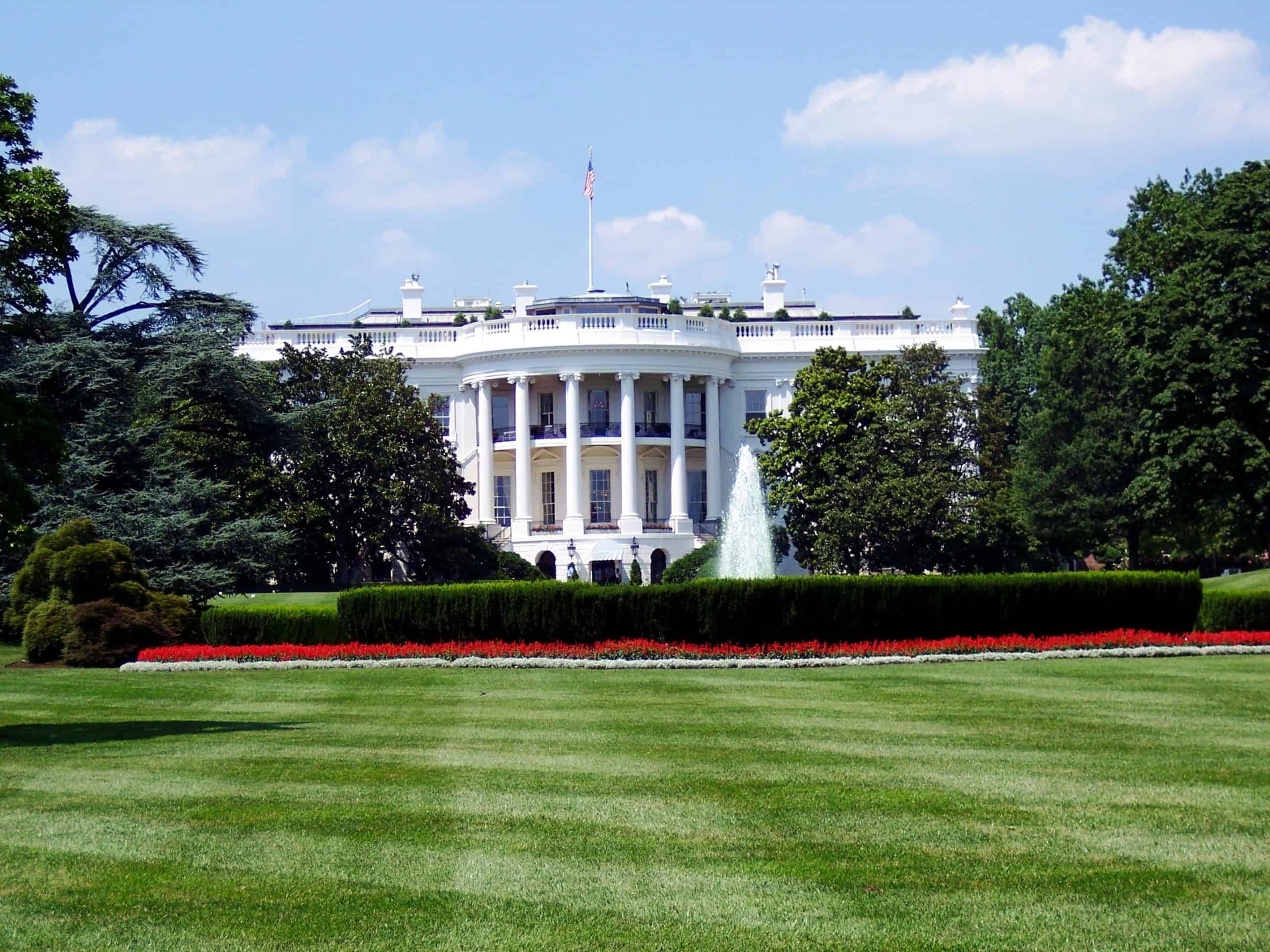
Money is power. In Washington, D.C., that isn't just a cliché; it’s the literal engine of the constitutional machine. You’ve probably heard the term "power of the purse." It belongs to Congress. But what happens when a President decides they simply don't want to spend the money Congress gave them? This brings us to a massive, often misunderstood legal tug-of-war: can the President impound funds appropriated by Congress?
The short answer is: not anymore. At least, not like they used to.
Back in the day, Presidents did this all the time. Thomas Jefferson famously declined to spend $50,000 intended for gunboats because he thought the threat had passed. He told Congress about it, and nobody really blinked. It was seen as "efficient management." But things changed—drastically—during the Nixon era. Today, the rules are tight, legalistic, and frankly, a bit of a headache for any administration trying to bypass the will of the House and Senate.
The Ghost of Richard Nixon and the 1974 Power Shift
To understand if a President can withhold cash today, you have to look at the 1970s. Richard Nixon was the king of impoundment. He didn't just trim the fat; he hacked off whole limbs of government programs he disliked, particularly regarding clean water and social programs. He treated the federal budget like a buffet where he could pick and choose what to put on his plate.
Congress hated this. They felt their constitutional authority was being evaporated.
In response, they passed the Congressional Budget and Impoundment Control Act of 1974. This law basically told the President, "If we give you money to spend, you spend it." It created the modern budget process we see today, including the Congressional Budget Office (CBO). Most importantly, it created two very specific, very narrow ways a President can try to delay or cancel spending: rescissions and deferrals.
Rescissions vs. Deferrals: The Only Legal Loopholes
If a President wants to stop spending money, they can't just "not do it." They have to follow a script.
First, there’s the rescission. This is a request to permanently cancel the funding. The President sends a message to Congress saying, "I don't think we need this $100 million for solar panels in Alaska." But here is the kicker: Congress has to agree. If Congress doesn't pass a new law within 45 days of continuous session to approve that cancellation, the President must spend the money. They can't just let the clock run out and keep the cash.
Then you have deferrals. This is just a delay. Maybe a project is running behind schedule, or there's some technical reason the money can't be spent yet. A President can defer funds, but only for "programmatic" reasons—not because they disagree with the policy. And even then, a deferral cannot extend beyond the end of the fiscal year.
The Supreme Court Weighs In: Train v. City of New York
While the 1974 Act was the legislative hammer, the Judiciary provided the nails. In the 1875 case Train v. City of New York, the Supreme Court dealt a finishing blow to the idea of "absolute" impoundment power.
The case was about the Clean Water Act. Nixon had impounded billions of dollars intended for sewage treatment plants. The Court basically said the President doesn't have the discretion to ignore a congressional mandate to spend. If the law says "shall spend," it doesn't mean "might spend if you feel like it." This established a firm boundary. When Congress appropriates money and uses mandatory language, the Executive Branch becomes a glorified delivery service.
Why People Are Asking This Question in 2026
The reason this topic is trending again isn't because of ancient history. It's because of modern political friction. There is a growing school of thought among some legal scholars—and certain political movements—that the 1974 Act is actually unconstitutional.
They argue that the "Executive Power" granted in Article II of the Constitution should include the right to manage spending more fluidly. They call the 1974 Act an encroachment on the President's ability to run the government efficiently. However, until a President successfully challenges this in the Supreme Court and wins, the 1974 Act remains the law of the land.
The GAO: The Watchdog with Teeth
The Government Accountability Office (GAO) acts as the referee here. They are the ones who catch "illegal impoundments." For example, back in 2019, the GAO concluded that the Trump administration violated the Impoundment Control Act by withholding aid to Ukraine that Congress had already authorized.
It wasn't just a political talking point; it was a formal legal finding. The GAO pointed out that the President cannot substitute his own policy priorities for those that have been enacted into law. This highlights a crucial distinction: administrative delays are fine, but policy-based refusals are illegal.
What Most People Get Wrong About "The Power of the Purse"
Honestly, most people think the President has more control over the "checkbook" than they actually do.
- Myth: The President can just "freeze" any budget they don't like.
- Reality: They can try, but the GAO will flag it, and they can be sued by the entities supposed to receive the money.
- Myth: If the President ignores Congress, nothing happens.
- Reality: It can lead to impeachment proceedings, GAO investigations, and mandatory "spend-it-or-lose-it" court orders.
It’s a complicated dance. Sometimes, a President will use "slow-walking" as a tactic. They don't technically impound the money, but they make the grant application process so tedious and slow that the money doesn't get out the door. It’s a shady gray area, but technically different from a formal impoundment.
Real-World Consequences of Budget Withholding
When money gets caught in an impoundment fight, real things stop happening. Infrastructure projects stall. Military aid gets stuck in limbo. Research grants for diseases like Alzheimer's or cancer get "reviewed" indefinitely.
In 1987, during the Reagan administration, there was a minor dust-up over housing funds. More recently, we've seen debates over "emergency" funds for border walls vs. urban development. Every time, the same question arises: can the President impound funds appropriated by Congress? And every time, the answer comes back to that 1974 law. Without it, the President would essentially be a king with total control over the national treasure. With it, they are a manager who has to follow the owner's manual—where Congress is the owner.
The "Executive Privilege" Defense
Some administrations try to claim that "executive privilege" or "national security" gives them the right to bypass spending laws. This is a tough sell in court. While the President has broad powers in foreign policy, the Supreme Court has generally held that those powers don't automatically override the specific, enumerated power of Congress to spend money.
If Congress passes a law saying "Spend $1 billion on X," the President can't usually say "No, I'm putting it in a drawer because of national security" unless the original law gave them a specific "out" or waiver.
Looking Ahead: The Future of Impoundment
We are likely headed for a massive legal showdown. There is significant chatter about a future administration potentially ignoring the 1974 Act entirely to see if the current Supreme Court will overturn it. Given the Court's recent trend of "originalist" interpretations and its skepticism of the administrative state (see the overturning of Chevron deference), some believe the 1974 Act is vulnerable.
If the Act were overturned, the President would regain the power Jefferson and Nixon enjoyed. It would fundamentally change how the U.S. government functions. We would go from a "legislative-led" budget to an "executive-led" one overnight.
Actionable Insights for Navigating Budget Policy
Understanding the limits of executive power over spending is vital for anyone in policy, law, or advocacy. If you are tracking a specific federal program, here is what you need to keep in mind:
- Watch the GAO Reports: The Government Accountability Office is your best source for knowing if an administration is quietly sitting on cash. They publish "Legal Decisions" on their website that are surprisingly readable.
- Differentiate Between Delay and Denial: If a program is slow to start, check if it's "administrative friction" or a formal "deferral." One is a bureaucratic mess; the other is a legal maneuver.
- Follow the 45-Day Rule: If the President submits a rescission request, mark your calendar. If Congress doesn't act in 45 days, that money must be released. Knowing this timeline allows advocates to apply pressure at the right moment.
- Check the Statutory Language: Look at the original bill. Does it say the President "may" spend or "shall" spend? That one word makes all the difference in whether a President has any legal ground to stand on.
The balance of power is precarious. While the President sits in the Oval Office, the checkbook is technically locked in a drawer in the Capitol Building. Understanding that the President cannot simply impound funds at will is the first step in understanding how the American government actually stays in business.