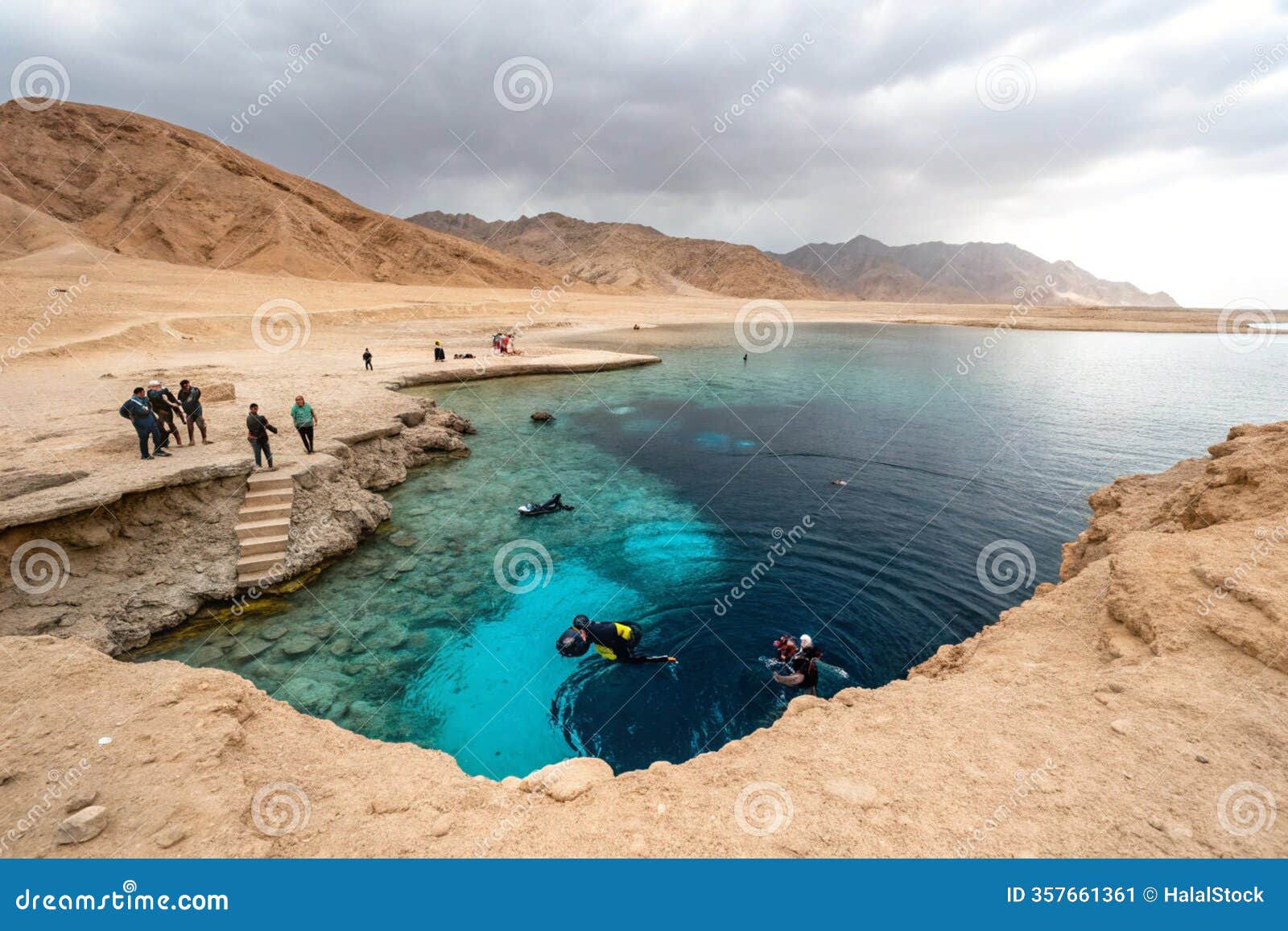
You’ve probably seen the photos. A deep, sapphire-blue circle punched into the shallow turquoise reef of the Red Sea. It looks like a dream. But if you mention the Dahab Blue Hole to any serious technical diver, the mood shifts. It’s a place of incredible beauty, sure, but it’s also earned a grim nickname: the World’s Most Dangerous Dive Site.
Is it actually that dangerous? Honestly, it depends on who you are and what you’re doing there. If you’re a snorkeler floating on the surface with a life jacket, it’s one of the most serene experiences on the planet. If you’re a recreational diver staying above 30 meters, it’s a standard, stunning reef dive. But for those chasing the Arch—a submerged tunnel at 56 meters—the stakes become literal life or death.
What’s Actually Down There?
The Dahab Blue Hole is a submarine sinkhole. It drops down to a depth of about 120 meters. It’s located just north of Dahab, a laid-back Bedouin town in the Sinai Peninsula that feels worlds away from the high-rise resorts of Sharm El Sheikh.
The geography is what draws people in. You walk right off the shore. No boat needed. You swim over a shallow "saddle" at about 6 meters deep, and suddenly, the floor drops away into an abyss. It’s disorienting. The water is so clear that you lose your sense of scale. You’re floating in a giant cylinder of blue.
Most people come for the El Bells entry point nearby. You jump into a narrow crack in the reef, descend through a chimney-like vertical tunnel, and emerge onto a sheer wall that eventually leads you back into the Blue Hole. It is breathtaking. The corals are healthy, and the light beams cutting through the water look like something out of a cathedral.
The Arch and the "Diver’s Cemetery" Myth
We have to talk about the Arch. This is where the Dahab Blue Hole gets its reputation. At around 56 meters deep, there is an opening in the reef wall that connects the sinkhole to the open ocean. It’s a 26-meter long tunnel.
Here’s the problem: 56 meters is well beyond the limit for recreational diving.
At that depth, nitrogen narcosis kicks in hard. It’s like being drunk underwater. Divers become confused. They think they are swimming toward the light of the exit, but because the tunnel is so long and the currents can be tricky, they miscalculate. Or worse, they don't realize how deep they actually are because the Arch is much deeper than it looks from above.
There are plaques on the cliffside near the entry point. They aren't "decorations." They are memorials for the dozens of divers who have lost their lives here. Some estimates suggest over 100 people have died in the hole, though there isn't an official government tally. Most of these deaths weren't "accidents" in the sense of gear failure; they were the result of human ego and pushing limits without the right training or gas mixes.
The Reality for Snorkelers and Casual Divers
Despite the dark history, the Dahab Blue Hole is incredibly accessible. Most days, the water is flat as a pancake.
You’ll see kids snorkeling here. You’ll see freedivers—people who dive on a single breath—using the hole as a training ground because there are no currents inside the circle. It’s actually one of the best places in the world to learn freediving. The lack of thermoclines (sudden temperature drops) makes it comfortable year-round.
If you’re just visiting for the day, you’ll likely hang out at one of the Bedouin-style cafes that line the shore. They have low cushions, carpets, and serve hot hibiscus tea. It’s "Dahab style"—very slow, very relaxed. You gear up, jump in, see the fish, and come back for a shakshuka.
Why the water is so blue
The depth creates a light absorption effect. Red and yellow wavelengths are filtered out first, leaving only the deep blues. Because the walls are so steep, there isn't much sand to kick up, so the visibility often exceeds 30 or 40 meters. It feels like flying.
Safety and Regulations in Egypt
The Egyptian Chamber of Diving and Watersports (CDWS) has tightened things up significantly over the last decade. You cannot just show up with a tank and jump in.
- Mandatory Guides: All divers must be accompanied by a certified local guide.
- Check Dives: Most centers will make you do a "check dive" at a shallower site like Lighthouse Reef before taking you to the Blue Hole.
- Technical Requirements: If you want to see the Arch, you need to be a certified technical diver with the appropriate trimix or deep-diving certifications.
Honestly, the "danger" is mostly gone for the average tourist because the regulations are so strict now. The danger only exists for those who try to bypass the rules or dive "solo" against local advice.
Getting There and Staying in Dahab
Dahab is about an hour's drive from the Sharm El Sheikh International Airport. You can take a private taxi or a shared bus. Once you’re in Dahab, getting to the Dahab Blue Hole usually involves a 20-minute ride in the back of a pickup truck or a jeep.
The road follows the coastline, wedged between jagged purple mountains and the sea. It’s a bumpy, dusty ride, but it’s part of the charm.
Dahab itself is a gem. It’s famous for its "wind" (great for windsurfing and kitesurfing) and its "chill." It’s much cheaper than Cairo or the big resorts. You’ll find world-class dive shops like Reef 2000, Desert Divers, or Blue Immersion. These places aren't just businesses; they are communities.
Best time to visit
- Spring (March to May): The weather is perfect, not too hot.
- Autumn (September to November): The water is at its warmest, often 27 or 28 degrees Celsius.
- Winter: It gets windy. The water drops to about 21 degrees. You'll need a thicker wetsuit, and the "exit" from the water can be chilly.
Common Misconceptions
People think the Blue Hole is a death trap. It isn't. It’s a natural wonder. The "danger" narrative is often played up by YouTube documentaries for views. In reality, thousands of people dive there safely every single month.
Another myth? That there’s "nothing to see" inside the hole. While the center of the hole is just deep blue water, the inner rim of the reef is teeming with life. Look for Orange Anthias, Napoleon Wrasse, and even the occasional turtle. The coral "saddle" is a nursery for juvenile fish.
Actionable Steps for Your Trip
If you're planning to visit the Dahab Blue Hole, don't just book a random day trip from a hotel lobby in Sharm. Do it right.
- Stay in Dahab: Don't do the 4 a.m. bus from Sharm. Stay in Dahab for at least 3 days. Get the vibe of the town.
- Hire a Guide: Even if you’re just snorkeling, a local guide knows where the currents are and can point out the "Bells" entry point.
- Check Your Insurance: Make sure your travel insurance covers "scuba diving" and check the depth limits. Standard plans often cut off at 18 or 30 meters.
- Respect the Memorials: When you see the plaques, take a moment. They serve as a reminder that the ocean doesn't care about your ego.
- Go Early: The site gets crowded with tour buses by 11:00 AM. If you get there at 8:00 AM, you’ll have the water—and the magic—almost entirely to yourself.
The Dahab Blue Hole remains one of the most iconic spots in Egypt for a reason. It is a place of extremes. It is hauntingly beautiful and deeply humbling. Respect the water, follow the local experts, and you’ll see why people keep coming back to this tiny desert town year after year.
Go for the dive, but stay for the tea and the silence of the Sinai desert. That's the real Dahab experience.