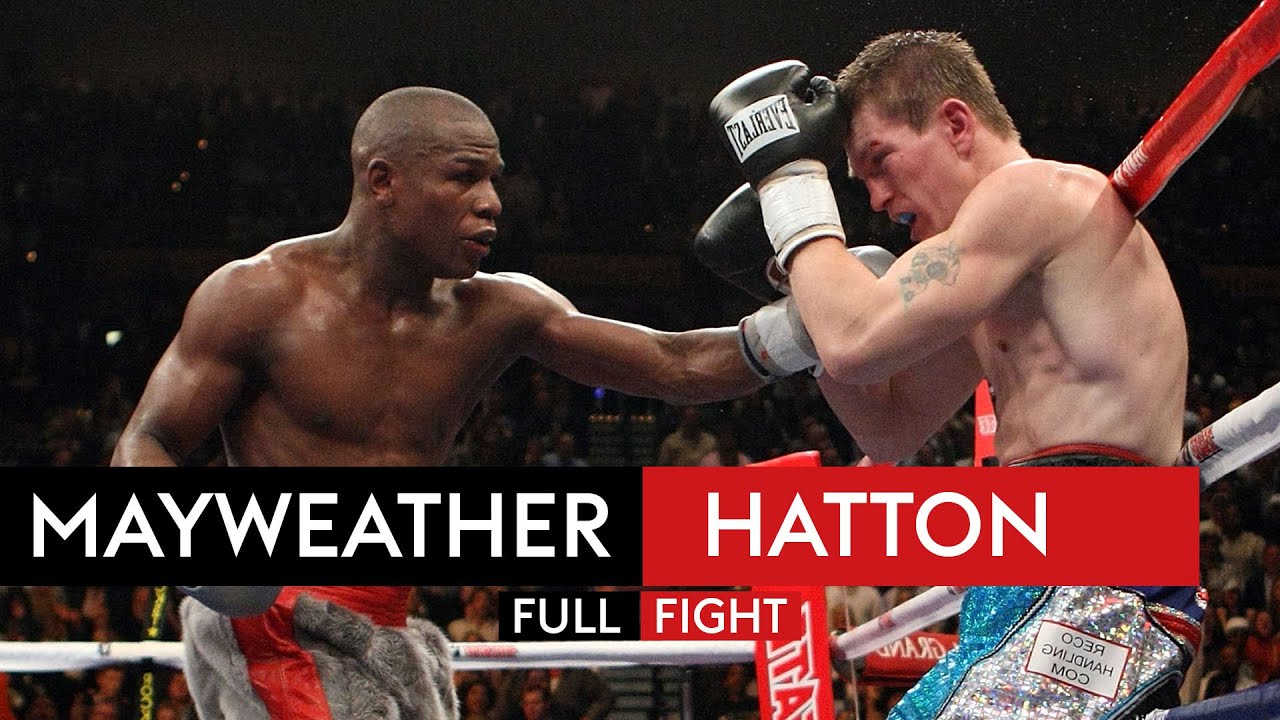
Honestly, if you weren't around in December 2007, it's hard to describe the sheer, unadulterated madness of the buildup to Floyd Mayweather vs Ricky Hatton. This wasn't just a boxing match. It was a cultural collision. On one side, you had "Pretty Boy" Floyd (this was right before the full "Money" Mayweather persona completely took over), the slick, arrogant defensive wizard from Grand Rapids. On the other, Ricky "The Hitman" Hatton, the Manchester City-loving, Guinness-drinking "people’s champion" who seemed to carry the entire weight of the UK on his shoulders.
The atmosphere in Las Vegas was absurd. Around 30,000 British fans descended on the Strip. They didn't all have tickets. Most didn't. They just wanted to be near the MGM Grand to sing "There’s Only One Ricky Hatton" until their lungs gave out. During the weigh-in, 8,000 raucous Brits booed Mayweather so loudly he could barely hear his own thoughts.
The Night the "Check Hook" Became Famous
When the first bell finally rang, the energy was vibrating through the floorboards. Hatton didn't waste time. He came out like a man possessed, charging across the ring to crowd Mayweather. In the first round, he actually caught Floyd with a stiff jab that sent the champion reeling back on his heels. The crowd erupted. For a second, it looked like the upset was on.
But Floyd Mayweather was—and is—a different kind of beast.
He stayed calm. He used his shoulders and elbows to frame Hatton, creating just enough space to breathe. As the rounds ticked by, the physical toll of Hatton’s "bulldog" style started to show. Hatton was lunging. He was getting frustrated with referee Joe Cortez, who was breaking the clinches almost instantly, preventing Hatton from doing his best work on the inside.
Then came the tenth round.
Hatton, desperate and exhausted, charged in again. He threw a speculative left hook, but his right hand dropped just an inch too low. Mayweather didn't just counter it; he performed a "check hook"—a lead hook thrown while pivoting out of the way of a charging opponent. It was a masterpiece of timing. Hatton didn't even see it. He spun around, head-first into the turnbuckle, before collapsing onto his back.
Why the Scorecards Don't Tell the Whole Story
A lot of people look back at the scorecards and think it was a total blowout. At the time of the stoppage, the judges had it 89-81 (twice) and 88-82. Basically, Hatton had only won one or two rounds on the official sheets.
But if you watch the fight today, it felt much more competitive in the moment. Hatton was winning the "event" even if he was losing the "rounds." He forced Mayweather to fight harder than he had in years. Floyd later admitted that Hatton was one of the toughest competitors he ever faced because he just wouldn't stop coming forward.
The Turning Points
- The Point Deduction: In round six, Cortez took a point from Hatton for hitting behind the head. It broke Ricky’s rhythm and, more importantly, his temper. He famously turned his back and wiggled his backside at Floyd in frustration.
- The Cut: Mayweather opened a nasty gash over Hatton’s right eye in the third. From that point on, Hatton was fighting through a red haze.
- The Body Work: We always talk about the hook, but Floyd’s straight right hand to the body in the middle rounds took the legs out of the Manchester man.
The Financial Fallout and Legacy
This fight was a massive commercial success. It did 920,000 pay-per-view buys in the US and over a million in the UK. Mayweather walked away with roughly $25 million, while Hatton cleared about $10 million. It cemented Floyd as the undisputed king of the sport and the biggest draw in the world after Oscar De La Hoya.
For Hatton, it was the beginning of a difficult road. It was his first professional loss after 43 wins. He struggled with the mental aftermath of losing his "invincible" status. While he went on to beat Paulie Malignaggi, the devastating knockout loss to Manny Pacquiao a couple of years later effectively ended his prime.
What Most People Get Wrong
People like to say Hatton was "exposed" that night. That’s nonsense.
Hatton moved up to 147 pounds to fight the greatest defensive technician of all time. He didn't lose because he was bad; he lost because Mayweather was a genius who could adapt to any style. If you watch the tape, you’ll see Mayweather actually doing "Hatton things"—using forearms, roughing people up, and fighting dirty when he had to.
The "Check Hook" wasn't a lucky punch. Floyd had been practicing it since he was an amateur in Michigan. He tried it in the earlier rounds, but Hatton had avoided it. He just waited for the fatigue to set in before he pulled the trigger again.
Practical Takeaways from the Fight
If you're looking to understand the technical side of what happened, focus on these three things the next time you watch the replay:
- Lead Shoulder Position: Notice how Mayweather uses his lead shoulder to hide his chin and deflect Hatton’s hooks. It’s a clinic in the "Philly Shell" defense.
- Pivot Footwork: Watch Floyd’s feet in the 10th round. He doesn't just step back; he pivots 90 degrees. That’s what created the angle for the knockout.
- Pace Management: Hatton fought at 100% for five rounds and then hit a wall. Mayweather fought at 70% for the whole fight, waiting for that wall to appear.
If you want to dive deeper into the tactics, go back and watch the 24/7 series HBO produced for this fight. It’s arguably the best piece of sports marketing ever created and shows the psychological warfare Floyd was winning long before the first punch was thrown.