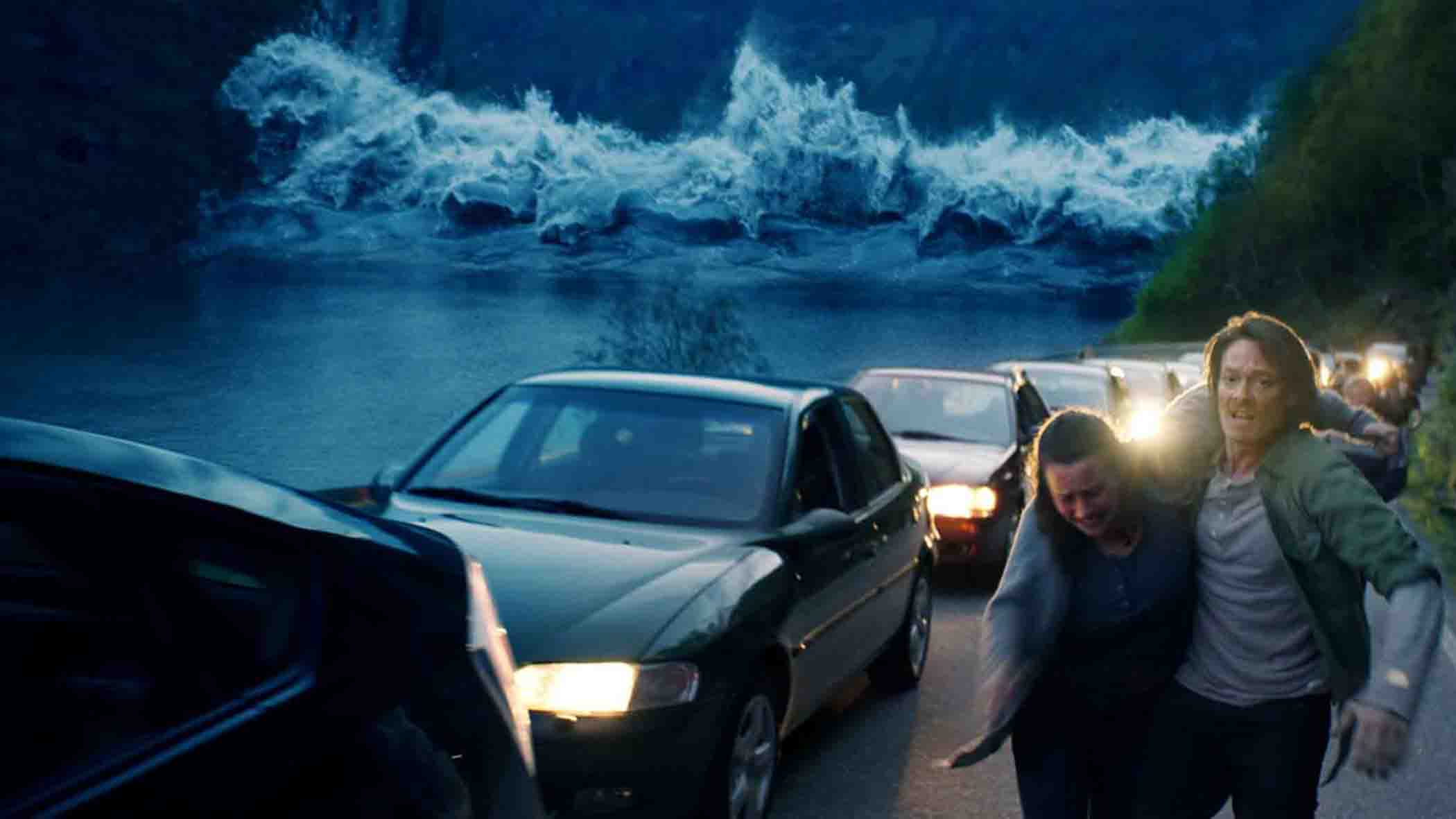
Movies about the world ending usually involve aliens or some giant laser from space. But the 2015 Norwegian movie The Wave (or Bølgen) is different. It’s scary because it’s actually going to happen.
If you’ve seen it, you know the vibe. It starts slow. Geologist Kristian Elkjord, played by Kristoffer Joner, is about to leave his job at the Geiranger monitoring station. He’s moving his family to the city. He’s got one foot out the door until he notices some weird readings in the mountain. Sensors are acting up. The groundwater levels are dropping. Everyone else thinks it’s a glitch. He knows it’s a mountain falling apart.
The Real Science Behind the Fiction
Norway is beautiful. It’s also vertical. The movie focuses on Åkerneset, a real mountain overlooking the Sunnylven fjord. This isn't just a cool filming location. It is a ticking time bomb. Geologists in the real world—actual people with degrees and safety vests—are monitoring a massive crack in that mountain right now.
Basically, the mountain is sliding. When it finally gives way, millions of cubic meters of rock will hit the water. This isn't just a splash. It’s a displacement event. In the movie, the resulting tsunami is 80 meters high. In real life, estimates suggest it could be just as devastating. The town of Geiranger sits right at the end of that funnel.
Why Norwegian Filmmaking Hits Different
Hollywood would have given us Dwayne Johnson jumping out of a helicopter. Director Roar Uthaug didn't do that. Instead, we get a guy who looks like he hasn't slept in three weeks trying to find his wife in a flooded hotel basement. It feels grounded. The tension doesn't come from explosions; it comes from the sound of a mountain groaning.
The pacing is deliberate. You spend the first forty minutes just getting to know the family. You see their messy house. You see the teenage son who doesn't want to move. By the time the alarm finally sounds—that haunting, low-frequency siren that echoes through the valley—you actually care if they drown.
The movie handles the "disaster" part with a terrifying lack of music. When the water hits, it’s just noise and darkness. It’s claustrophobic. It reminds me a bit of The Impossible, that Naomi Watts movie about the 2004 Indian Ocean tsunami, where the water isn't a clean blue wave but a churning mass of debris and mud.
The Legacy of 1934
People sometimes think The Wave is just "Norway does Hollywood." But Norway has its own history with this. In 1934, a rockslide in Tafjord created a tsunami that killed 40 people. It happened in the middle of the night. No warning. No sensors.
The film pays homage to that trauma. It’s why the characters react the way they do. There is a deep-seated cultural understanding in the fjords that the mountains, while beautiful, are not permanent. They are moving. Slowly.
Breaking Down the VFX
For a movie with a fraction of a Marvel budget, the special effects are incredible. Gimpville, the Oslo-based VFX house, handled the heavy lifting. They didn't try to show too much. By keeping the camera low and focusing on the scale of the water relative to the small buildings, they made it feel massive.
The scene where the wave finally crests over the mountain ridge is a masterclass in "less is more." You see the white foam against the dark night sky. It’s quiet for a second. Then the sound hits.
What Most People Miss
The real villain isn't the water. It’s the bureaucracy.
Kristian tries to warn his colleagues. They hesitate because they don't want to "cry wolf" and ruin the tourist season. It’s a classic trope, sure, but in the context of a small Norwegian town that relies entirely on cruise ships, it feels painfully realistic. They aren't evil; they're just human and worried about their jobs.
If you haven't watched it yet, find the original Norwegian audio with subtitles. The English dub is... fine, I guess, but you lose the frantic energy in Joner’s voice. He sounds like a man losing his mind, and that’s half the fun.
Actionable Insights for Fans of the Genre
If you watched the Norwegian movie The Wave and now you’re obsessed with geological disasters or Nordic cinema, here is what you should do next:
- Watch the Sequel: Many people don't realize there is a follow-up called The Quake (Skjelvet). It features the same lead actor and deals with a massive earthquake hitting Oslo. It’s just as stressful.
- Check the Real-Time Data: If you're a nerd for the science, you can actually look up the monitoring data for Åkerneset. The Norwegian Water Resources and Energy Directorate (NVE) keeps public records on mountain stability.
- Explore the "Nordic Disaster" Sub-genre: After The Wave and The Quake, check out The Burning Sea (Nordsjøen). It deals with the collapse of oil rigs in the North Sea. It’s the unofficial third entry in this "Norway is falling apart" cinematic universe.
- Visit Geiranger (Carefully): It is one of the most beautiful places on Earth. Just maybe check where the "High Ground" signs are. They are real, and they are marked clearly throughout the town.
- Analyze the Cinematography: Watch the film again and pay attention to the lighting. The "blue hour" of the Norwegian evening is used to create a sense of impending cold and wetness long before the water arrives.
The movie works because it’s a "when," not an "if." That’s the kind of horror that stays with you long after the credits roll. It’s a reminder that we live on a planet that is constantly reshaping itself, often without asking for our permission.